


Highlights About LPG Dispensers
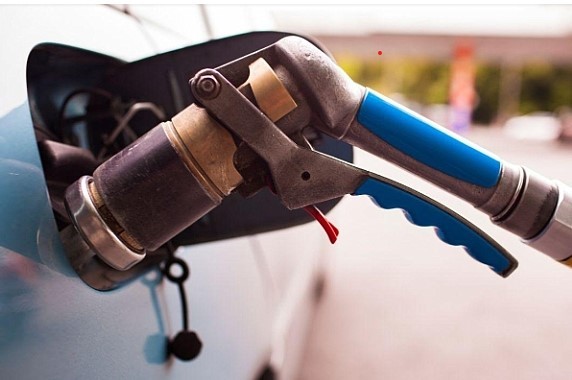
LPG Dispenser
An LPG dispenser is a machine used for the distribution of Liquefied Petroleum Gas (LPG). The LPG dispenser is equipped with electronic and mechanical units to measure and calculate the LPG filling amount. Liquefied petroleum gas (LPG) is a new type of energy. It can replace gasoline and diesel fuel used in various fields. Despite this, its usage rate is increasing day by day.
Cost-Effective Solution
The more affordable price of LPG compared to other fuels provides production cost savings for most industries. Moreover, being cheaper than natural gas and petroleum gas makes it the most commonly used fuel in industrial applications. Therefore, industries can maximize their profits by saving energy. In addition, since it is easily transportable and there is no spillage at the facilities where it is used, there is no fuel waste.
LPG is easy to use and manage because it does not produce harmful emissions such as smoke and unburned carbon particles. This makes LPG a clean-burning fuel. As a result, it reduces maintenance requirements for combustion systems, improves product quality, and increases industrial efficiency. Furthermore, since there is temperature control, it is very easy to maintain temperature homogeneity.
Environmentally Friendly
The need for an environmentally friendly fuel makes LPG the best choice. Protecting the environment is a necessity if we want to have a sustainable future. The minimal amount of nitrogen, sulfur, and other particulate matter in LPG reduces greenhouse gas emissions. This decreases the ozone layer damage that can lead to global warming. Additionally, the use of LPG prevents deforestation for firewood, thereby enhancing environmental beauty. Today, trees in forests are still being rapidly cut down for many purposes.
As global energy consumption increases every year, the energy crisis deepens day by day. The continuous rise in gasoline and diesel prices, which are the traditional energy sources for transportation, further intensifies the economic pressure on vehicle owners. In addition, in recent years, countries around the world have been paying increasing attention to environmental protection, drawing attention to the problem of air pollution in cities. Nearly all countries have set strict standards for vehicle exhaust emissions.
China has been promoting the use of LPG as fuel for automobile engines for many years to alleviate the pressure on gasoline and diesel, reduce the economic burden on vehicle owners, and make polluted city air cleaner. At the same time, LPG dispenser stations have been established in various locations. The LPG filling machine is one of the most important pieces of equipment at a filling station. LPG gas feeders can be divided into two types: cylinder filling dispensers and car filling dispensers, each with different features.
Cylinder Dispenser
- Easy to use, fast filling
- Digital tube display
- Impact resistant
- Easy balance calibration
- Filling and automatic filling are adjustable
Car Dispenser
- The LPG dispenser includes details such as LPG liquid pipeline, gas pipeline, valve, flow meter, temperature sensor, and electronic control device, as well as a gas-liquid separator
Working Principle of Dispensers
The LPG in the storage tank is transferred to the dispenser by a pump, and the separator isolates the gas from the liquid. Then the gas returns to the storage tank, and the liquid is sent to the flow meter for measurement. Afterward, the liquid is sent to the filling nozzle, and the car filling process begins. LPG dispensers have a wide range of features.
Key Functions and Features
- Computer control — the electronic control device can automatically display the gas amount
- Automatic filling function when gas is full
- Can automatically stop without ventilation over time; can adjust the size of flow rate protection
- Long-term data storage after power outage and full functionality restoration when power returns
- Easy access to recent transaction data, for example the last 50 transactions
- Can calculate the value of active gas
- Automatic fault detection function that can automatically display the fault code
- Ability to add gas to gas vehicles with different interface types
- Safe operation time — protection function to prevent leakage during gas filling into the vehicle
- Limited current protection function for gas safety
- Necessary functions to facilitate debugging of the entire machine
- Rich program functions included
Why Is LPG Advantageous as a Vehicle Fuel?
When liquefied petroleum gas (LPG) is used in internal combustion engines, it is called Auto LPG. LPG, a mixture of propane and butane, can be obtained from crude oil or natural gas. LPG is the third most widely used automotive fuel in the world, powering 27 million vehicles. Since liquefied petroleum gas burns cleaner than gasoline and can produce lower amounts of certain harmful emissions such as carbon dioxide, it can be used to power internal combustion engines as an alternative fuel. One of the greatest benefits of using LPG as an alternative fuel is that it is generally cheaper than gasoline. Additionally, the careful design and safety features of the tanks, having only a shut-off valve, make them slightly safer than gasoline. This minimizes the fire risk of LPG when used as vehicle fuel.
Liquefied petroleum gas (LPG) is a fundamental industrial fuel with many applications across all industrial fields. It is also preferred over natural gas due to its lower maintenance requirements, low carbon footprint, convenience, and price. The need for technological breakthroughs and a sustainable environment has made LPG the best fuel. Furthermore, its propane components make it more advantageous than petroleum gas and natural gas. Among the many benefits of LPG, it is preferred over other energy sources because it is easy to transport.
Good for the Engine
LPG is also good for your vehicle's engine. As a cleaner-burning fuel that leaves little residue, LPG does not damage the engine. Instead, it ensures that engine components last longer. Being a high-octane fuel, it ignites faster, meaning there is no pre-ignition or knocking. An LPG car engine warms up faster even when the engine is completely cold. This is highly beneficial for the engine because better and faster combustion means no knock damage. This also provides a low-noise driving experience. It is estimated that engines running on auto LPG can last up to twice the lifespan of a gasoline-powered engine.
Reduces Maintenance Costs
This is a natural consequence of the above advantage. Since LPG causes very little damage to the engine and its components, your maintenance and service costs remain low. LPG does not leave carbon or acid residues on the engine, and corrosion or damage to engine parts is minimal. As a result, your spark plugs, valves, and pistons stay cleaner and smoother for longer. Much research on LPG is still ongoing. We have compiled the highlights about LPG for you in general terms. Additionally, as we mentioned above, LPG dispensers are now starting to appear at stations and their numbers are increasing every day.
-

15.11.2022 LPG Dispenser Hakkında Öne ÇıkanlarREAD MORE -
11.09.2026 What Is a Hydrogen (H2) Compressor and H... Gas compressors make it possible to store and transport a gas by reduc...READ MORE -
05.08.2019 Ülkenin Büyük Kısmını İlgilendiren Haber... Otomobil kullanıcılarının yaklaşık %40 ı LPG’li araç kullanıyor. Dola...READ MORE -
26.12.2018 DÜNYADAN OTOGAZ HABERLERİ Ohio’da çevre dostu filo, Otogaz’a geçiş tanıtıldıToplu taşıma acentas...READ MORE